
Holy Basil Essential Oil
Holy Basil Essential Oil
A distinctive Thai herbal essential oil with a warm, spicy and aromatic profile for trade buyers seeking a less mainstream botanical ingredient.
SHORT PRODUCT DESCRIPTION
Ocimum sanctum/Ocimum tenuiflorum (also known as Tulsi) Holy Basil Essential Oil is a distinctive Thai botanical oil with a warm, herbal and slightly spicy aroma profile.
For international trade buyers more familiar with mainstream oils such as lavender, peppermint, tea tree or eucalyptus, Holy Basil offers a more unusual ingredient direction with clear Southeast Asian provenance.
It may be of interest to manufacturers and formulators looking to create Thai-inspired, botanical or premium aroma concepts.
THAI HERITAGE & PROVENANCE
Holy Basil is widely recognised in Thailand as an aromatic herb with strong local identity. It is closely connected with Thai ingredient culture and is familiar across Thai homes, markets and traditional botanical use.
For commercial buyers, this provenance gives Holy Basil a clearer story than many generic herbal oils. It helps support product ranges where Thai origin, natural ingredient identity and botanical differentiation are important.
AROMA PROFILE
Holy Basil can present a warm herbal character with spicy, green and slightly clove-like notes. The exact aroma profile may vary by batch, crop, plant part and production method. Sample evaluation is recommended before commercial use.
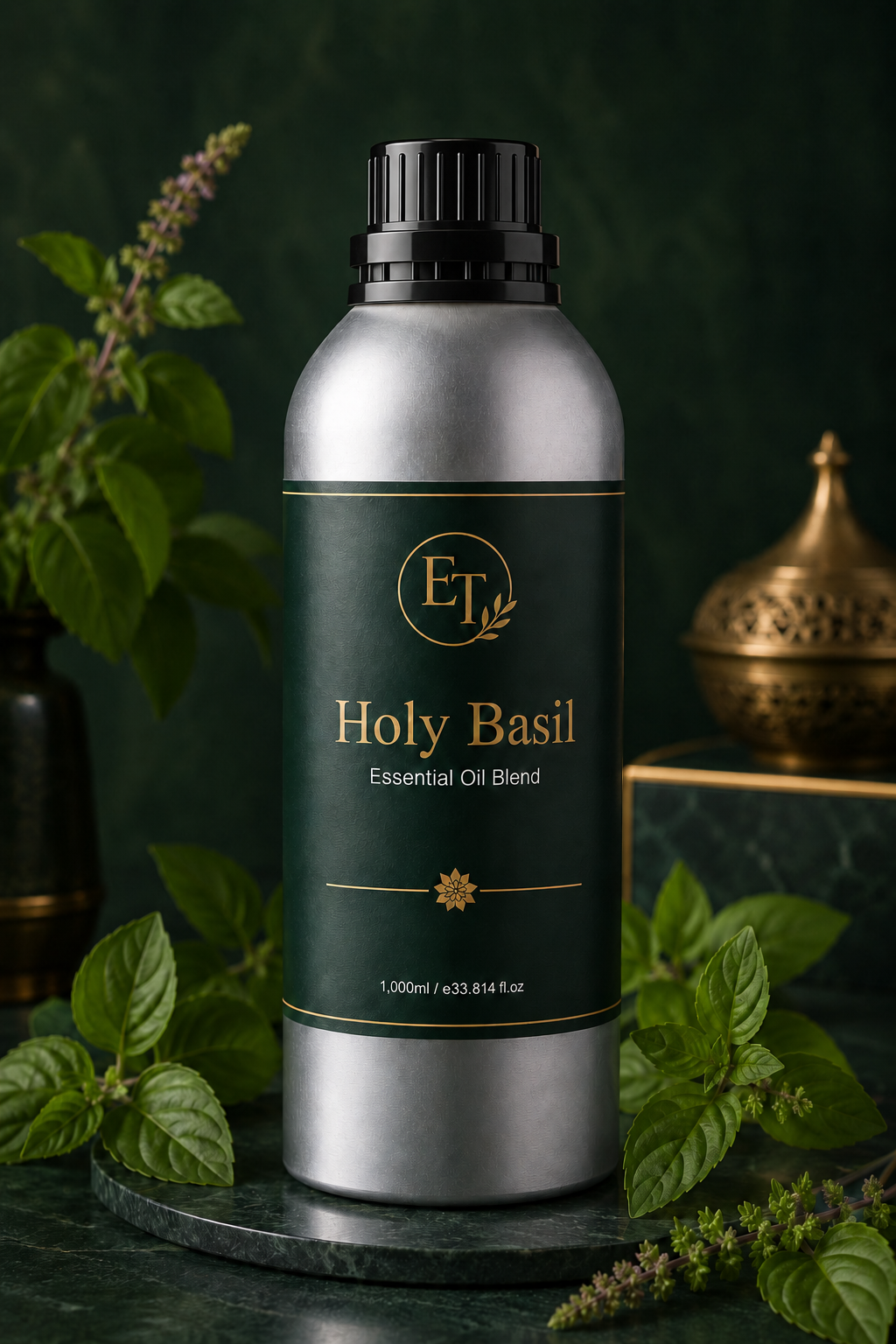
Example Applications for Holy Basil Essential Oil
Holy Basil Essential Oil
Natural fragrance, wellness-positioned ranges, spa products, herbal accords, diffuser blends
Product Evaluation & Trade Review
This product is presented for trade evaluation by manufacturers, formulators and professional buyers seeking Thai-origin botanical ingredients for use in finished-product development.
Before any commercial supply is confirmed, sample evaluation and product-documentation review should be completed. Documentation requirements may vary depending on the buyer’s intended application, destination market, formulation type and internal compliance process.
For qualified trade enquiries, we can request and review relevant supplier documentation as part of the sample and batch-confirmation process. This may include, where available and applicable, product identity information, certificate of analysis, safety data sheet, origin details, allergen information, flash point data and other batch-related records.
Commercial suitability should always be assessed by the buyer, formulator or responsible technical party before use in any finished product.
Sample & Documentation Process
Initial enquiries are handled through a structured review process rather than immediate blind supply.
Once a buyer has confirmed their product interest, intended application and approximate volume requirement, we can discuss sample availability and request the relevant supplier information needed for preliminary evaluation.
Where appropriate, this process may include:
- Confirmation of product type and botanical identity
- Sample quantity discussion
- Intended application review
- Preliminary order-volume discussion
- Supplier documentation request
- Batch or production-method confirmation where available
- Packaging and dispatch discussion
- Follow-up review before commercial supply is considered
This approach is designed to help buyers assess the ingredient properly before committing to larger-volume orders.
Buyer Review Checklist
Before progressing to commercial supply, we recommend that buyers review the following points:
- Intended finished-product application
- Required sample quantity
- Target order volume
- Packaging and storage requirements
- Required documentation for internal approval
- Labelling, safety and regulatory considerations
- Any country-specific import or compliance requirements
- Batch consistency requirements for repeat supply
Our role is to support this review process by coordinating product information, sample discussion and supplier documentation requests before larger-volume orders are considered.
Current Supply Status
This ingredient is currently presented for trade enquiry, sample discussion and buyer evaluation.
Initial enquiries are handled on a case-by-case basis. Before confirming any commercial supply, we aim to clarify the buyer’s intended application, required documentation, preferred order size and any specific technical or compliance requirements.
Samples and supporting documents should be reviewed before the ingredient is used in commercial formulation or production.
Thai Essential Oils & Natural Aroma Ingredients
HOLY BASIL ESSENTIAL OIL
A distinctive Thai herbal oil with a warm, spicy, aromatic profile suitable for premium botanical, diffuser, fragrance and wellness-style product development.
AROMA DIRECTION
Herbal - Spicy - Warm - Aromatic
SHORT PRODUCT DESCRIPTION
Ocimum sanctum/Ocimum tenuiflorum (also known as Tulsi) Holy Basil Essential Oil is a distinctive Thai botanical oil with a warm, herbal and slightly spicy aroma profile.
For international trade buyers more familiar with mainstream oils such as lavender, peppermint, tea tree or eucalyptus, Holy Basil offers a more unusual ingredient direction with clear Southeast Asian provenance.
It may be of interest to manufacturers and formulators looking to create Thai-inspired, botanical or premium aroma concepts.
THAI HERITAGE & PROVENANCE
Holy Basil is widely recognised in Thailand as an aromatic herb with strong local identity. It is closely connected with Thai ingredient culture and is familiar across Thai homes, markets and traditional botanical use.
For commercial buyers, this provenance gives Holy Basil a clearer story than many generic herbal oils. It helps support product ranges where Thai origin, natural ingredient identity and botanical differentiation are important.
AROMA PROFILE
Holy Basil can present a warm herbal character with spicy, green and slightly clove-like notes. The exact aroma profile may vary by batch, crop, plant part and production method. Sample evaluation is recommended before commercial use.